Day 1 - Porto Cathedral to Apulia
- Camino distance: 53.3km
- Garmin distance: 57.0km (64k steps)
Porto Cathedral: 0km
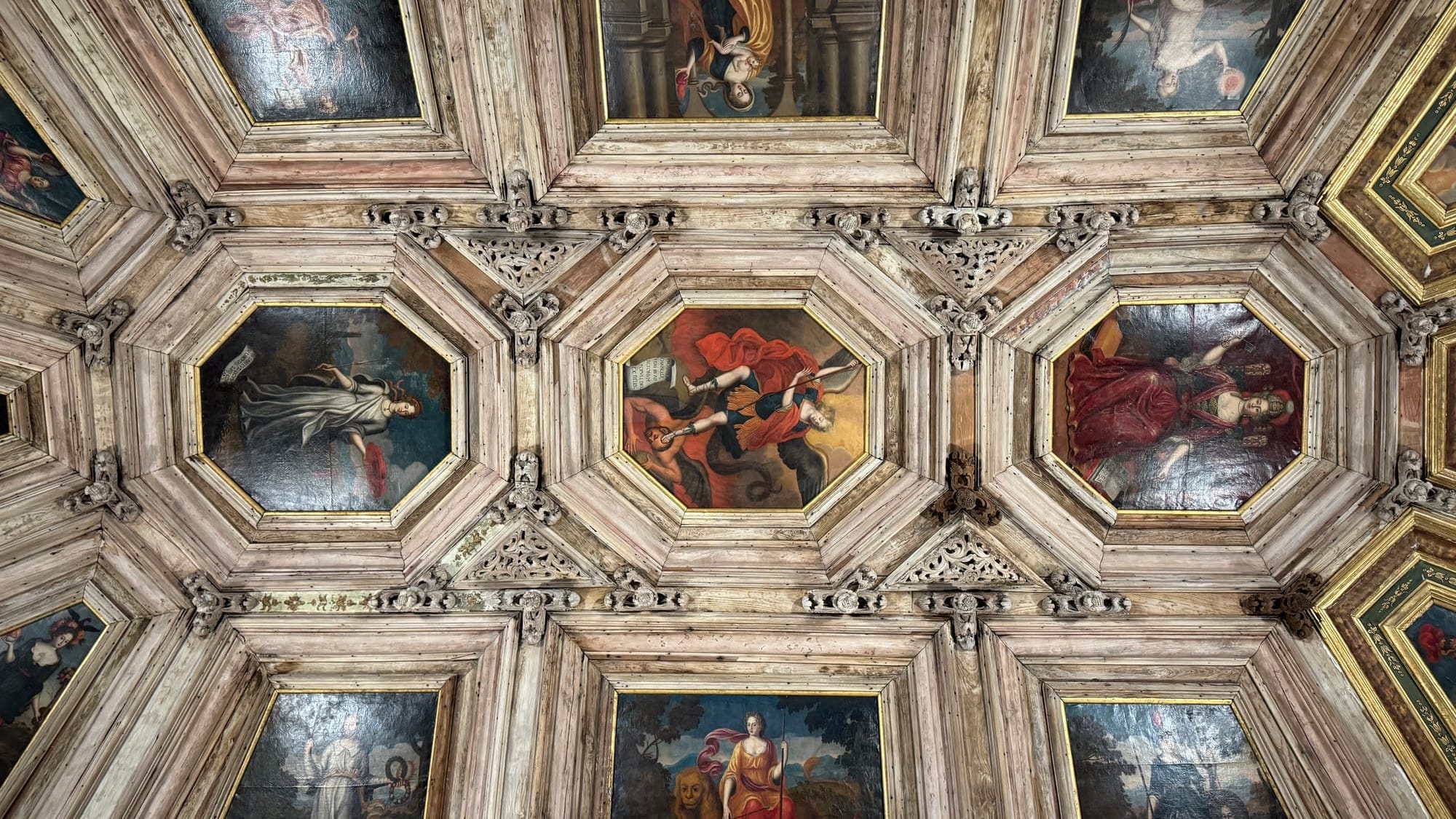
Starting at the ungodly hour of 7am on a crisp, cool, and slightly misty morning, I found myself at the majestic Porto Cathedral. Perched high above the city like a benevolent overseer, it offers a commanding view of the rooftops of neighboring buildings. From this lofty perch, I began my descent down winding, high-walled steps that snake through ancient archways, narrow alleys, and charming little squares, eventually depositing me on the serene banks of the Duoro River.
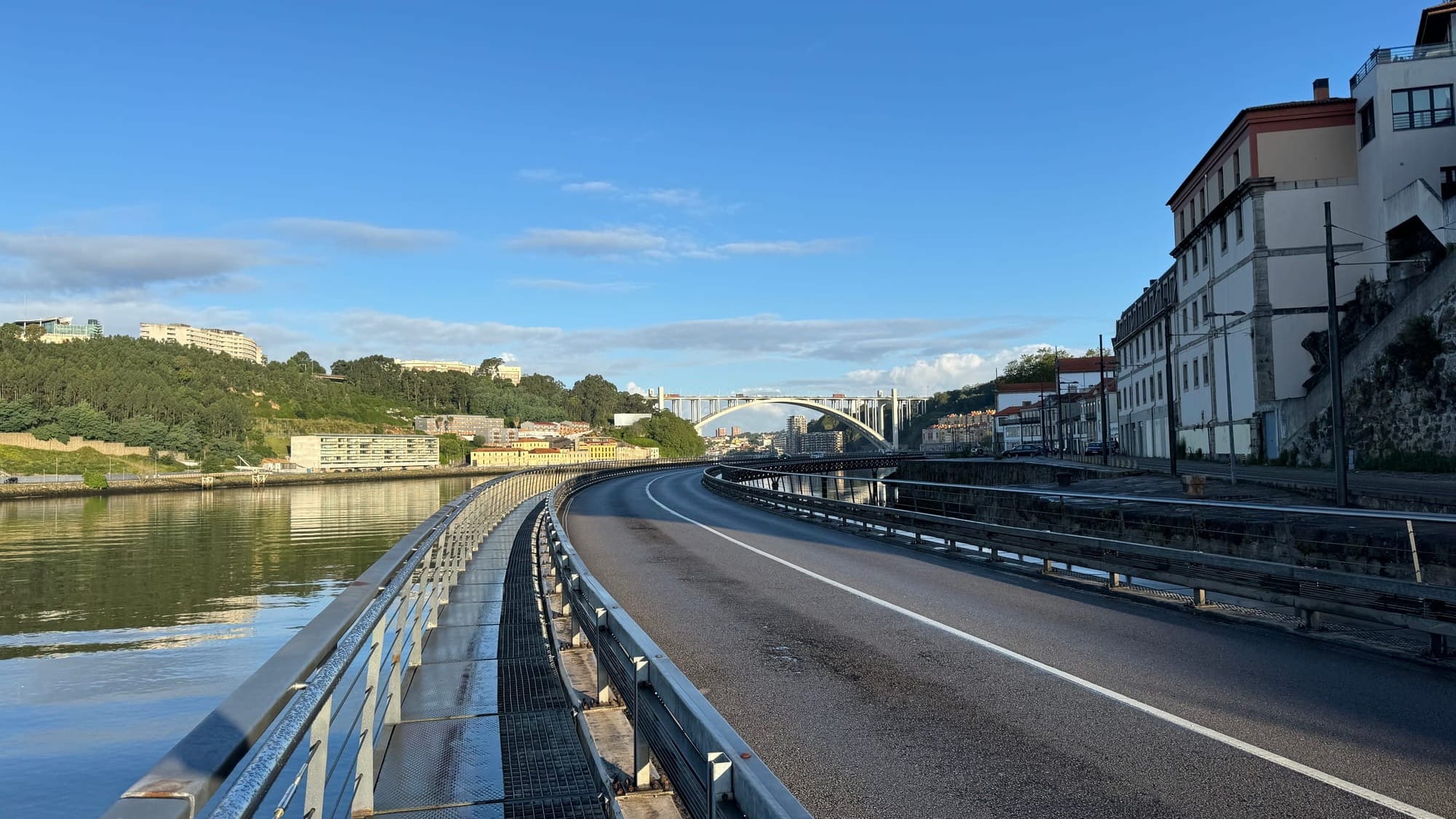
By night, this riverside stretch is a hive of activity, buzzing with bars and restaurants teeming with people enjoying the local fare and being entertained by various street performers. But at this early hour, it was eerily silent and still, like a stage set before the actors arrive. Setting my sights on the Atlantic coast, I was treated to a distant view of the Ponte da Arrábida, an engineering marvel with its graceful arch carrying six lanes of traffic and spanning half a kilometre at an impressive height of 230 feet.
The walk along the river is splendid. At one point, you encounter a peculiar pedestrian bridge that whimsically detaches from the land and hovers momentarily over the water, supported by a mesh floor that is not for the faint-hearted. After this brief thrill, the path leads under the bridge and makes its way through an attractive part of town. Here, the streets are lined with trees and you can witness the delightful sight of historic trams clattering along as if they’ve popped out of a vintage postcard.
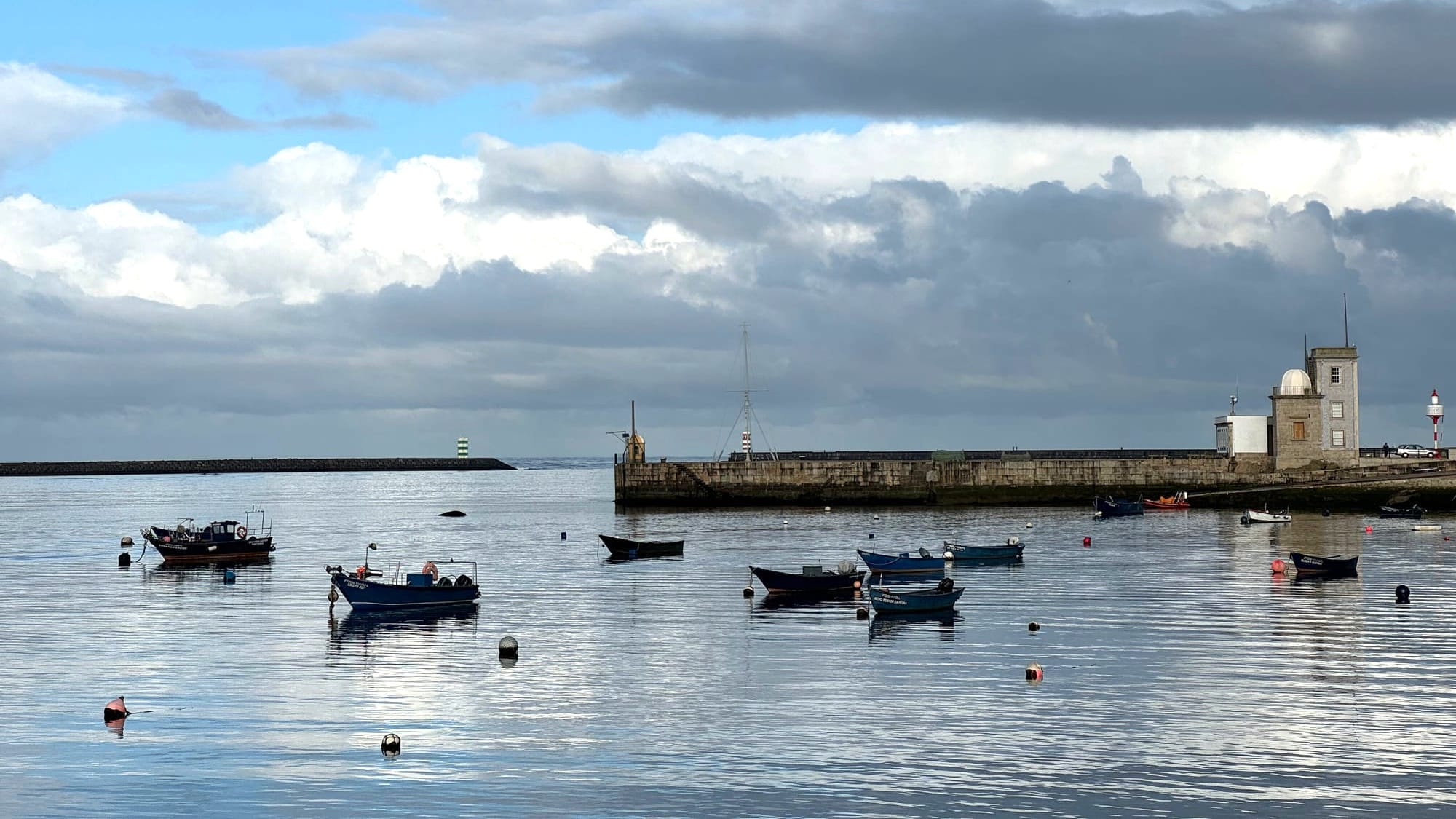
After an hour or so, during which time the mist lifted revealing a gloriously bright and sunny morning, you finally meet the coast where the seemingly endless stretch of beach that defines the start of my hike begins. Turning north, the road transforms into a wide promenade, perfect for a leisurely stroll. This promenade is flanked by numerous hotels, all offering splendid views of the sea. And so, with the Atlantic breeze in my hair and the promise of adventure ahead, I continued on my way.
Matosinhos: 11.1km
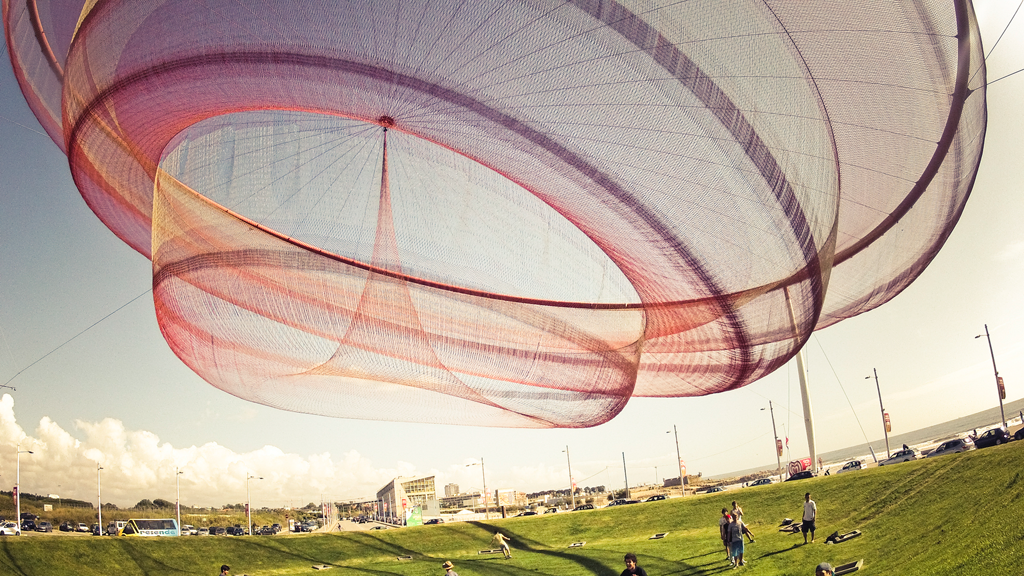
Just before reaching the port of Matosinhos, you come across an art installation so enormous it seems to defy logic. This colossal structure, titled She Changes (known colloquially as the "anemone"), made of billowing round nets and a twenty-ton steel ring, pays homage to the local fishing industry. To the untrained eye, however, it rather looks like the landing site for some outlandish, long-distance, human cannonball act.
Turning inland and navigating through the more industrial sections of the port, we cross the Rio Leça by bridge. Bonus fact! "Rio" is the masculine form used for saltwater rivers, while "Ria," the feminine form, is used for freshwater rivers. From there, we head back to the coast, passing the Farol de Leça, the second-tallest lighthouse in Portugal, no less.
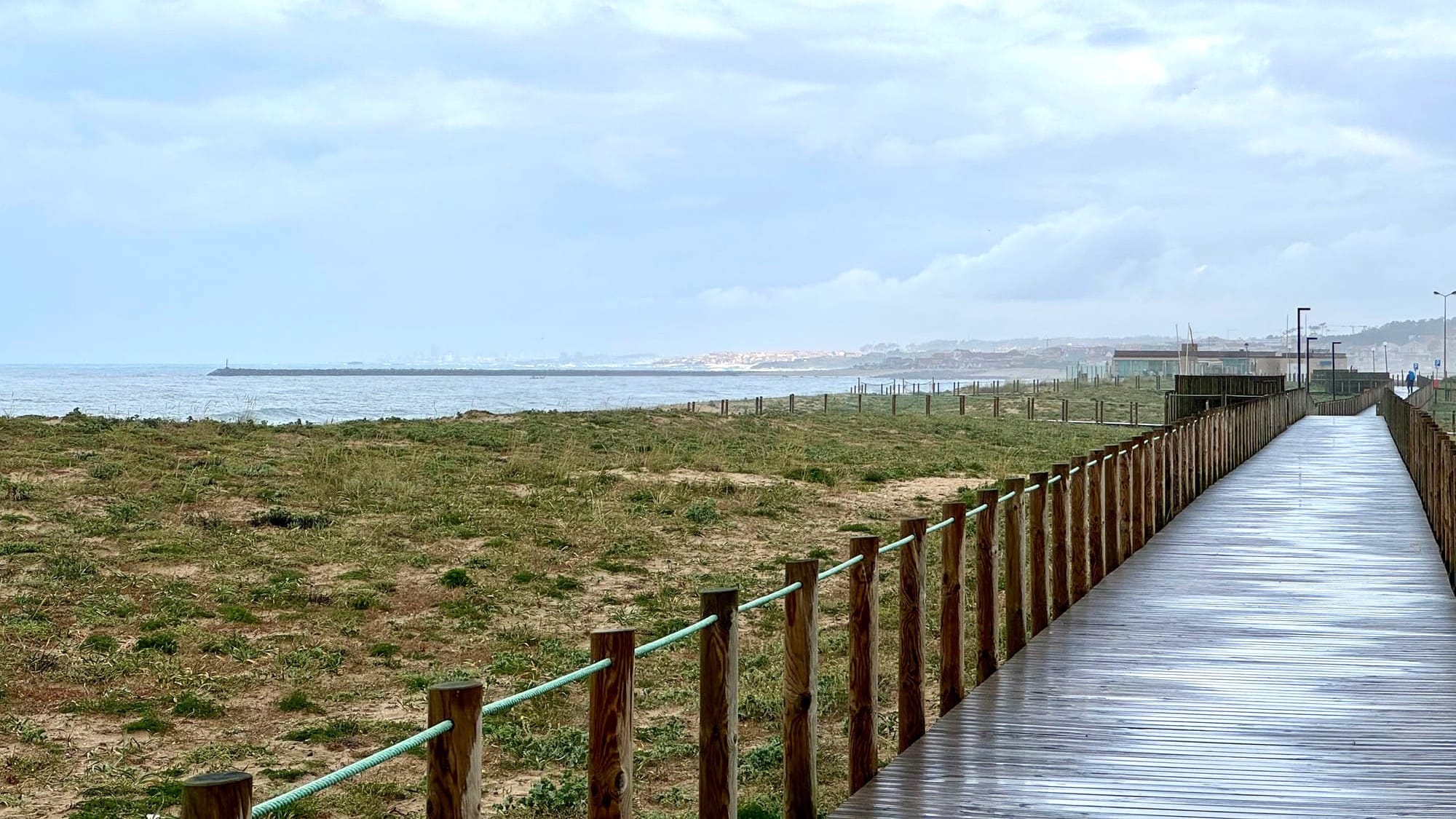
Soon, we find ourselves on the famous wooden boardwalks that characterise a significant portion of the Senda Litoral Camino route. Walking on these boards is a relief for the feet, offering a light spring with every step — a welcome change from the unyielding concrete and asphalt stretches. It's like walking on a gentle trampoline, making each step a small pleasure rather than a chore.
Labruge: 24.4km
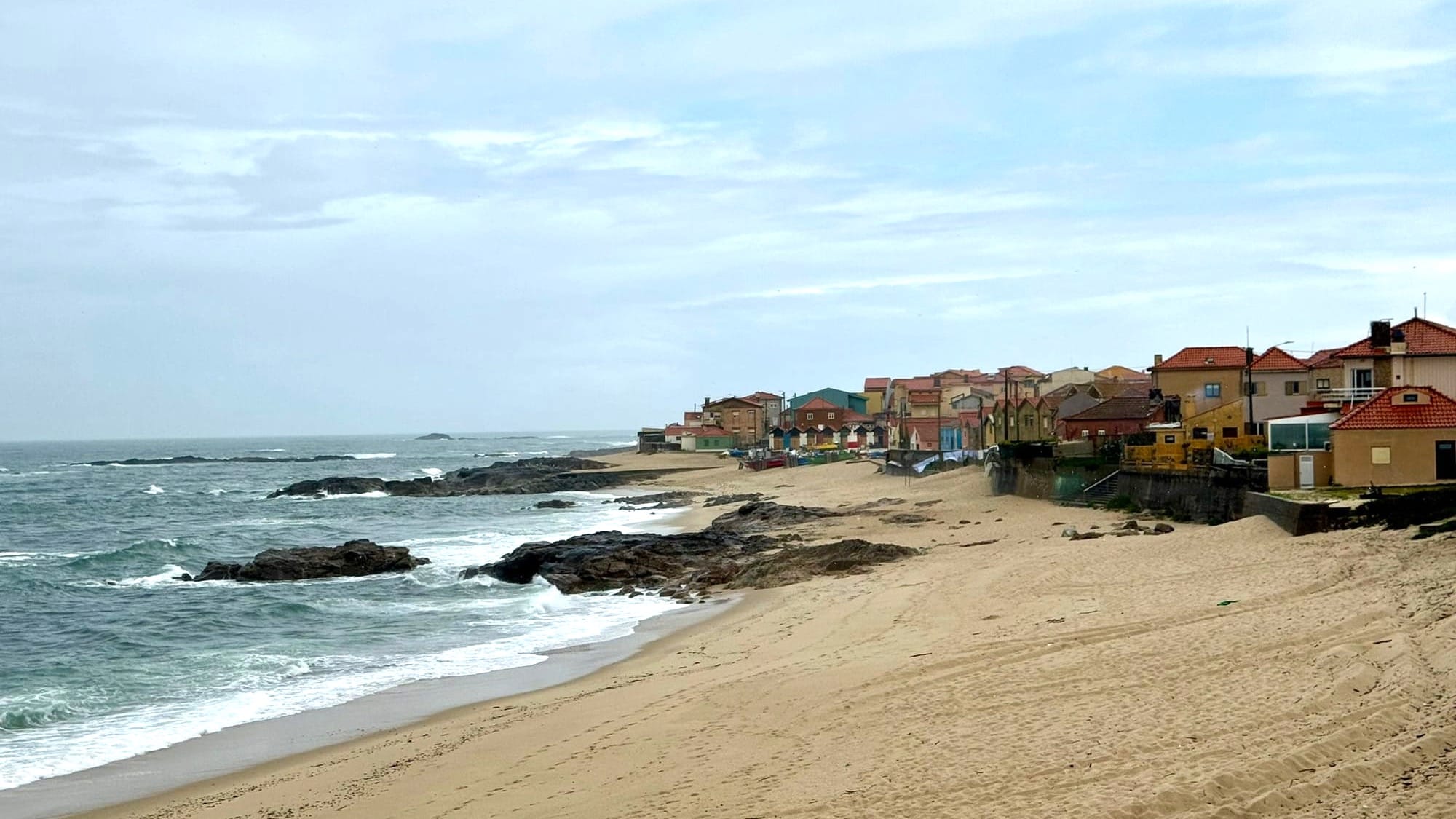
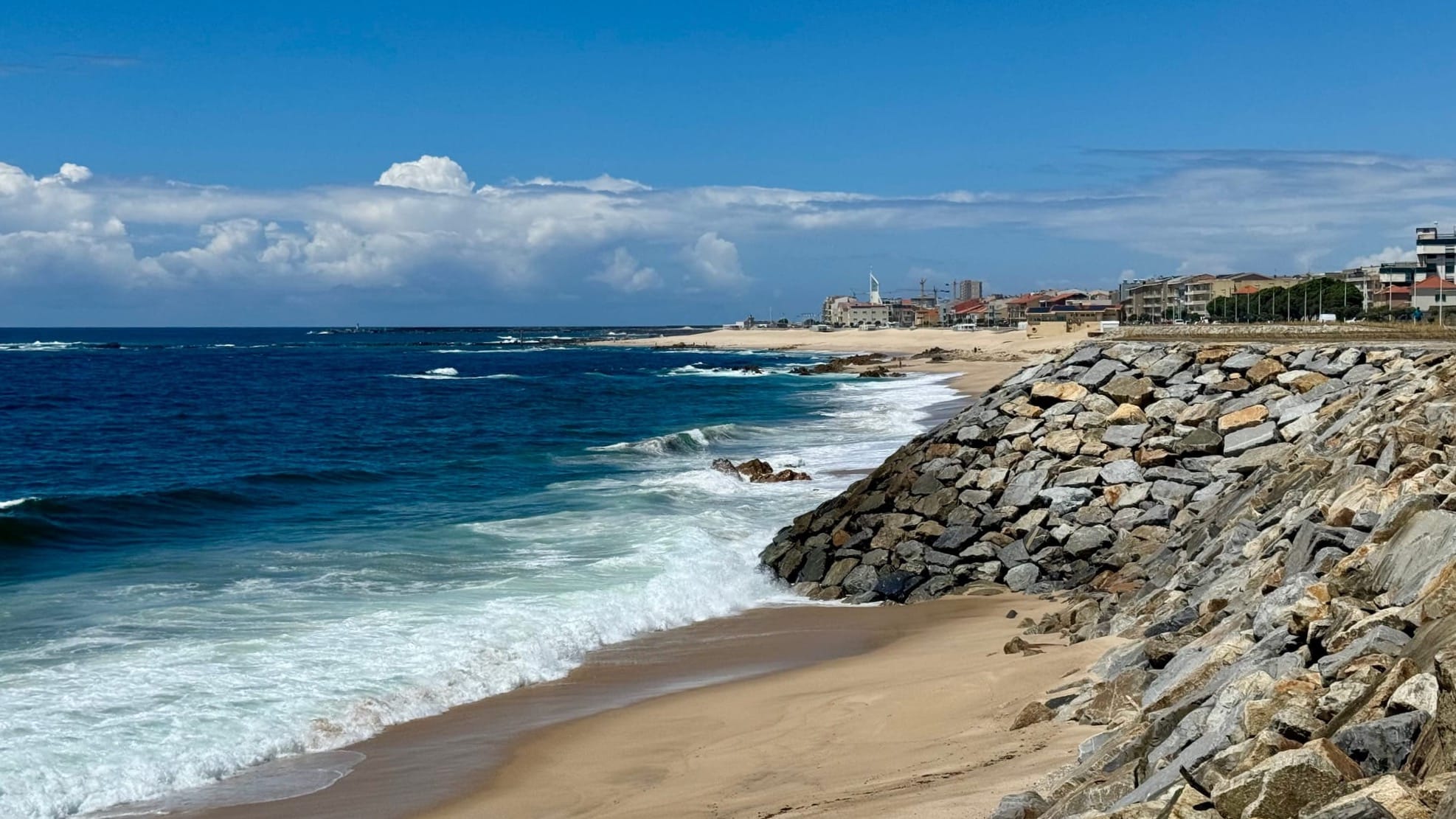
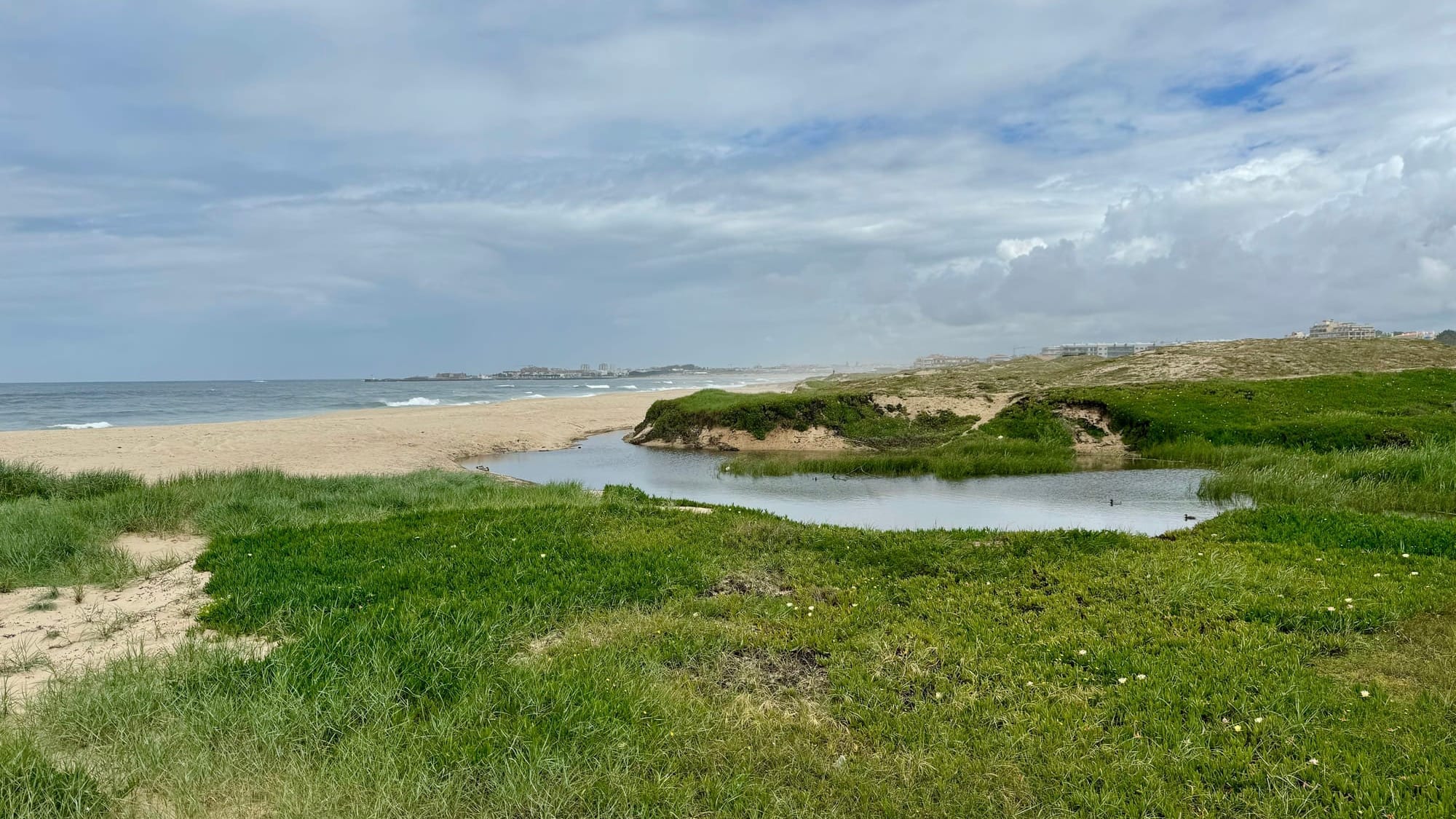
Around four hours in, we start to lose the density of buildings that have been our companions since leaving Porto. Passing by Labruge, the inland view opens up into fields, offering a welcome respite from civilisation. The coast remains dramatic and stunning, with sandy beaches interrupted by jagged granite rocks that look as though they’ve been scattered by a careless giant. It’s a stark but beautiful contrast, making the journey all the more captivating.
Consulting my map, I decided to stop for lunch in Vila do Conde, which was another hour or so away. As a vegetarian who also avoids eggs, eating in Portugal and Spain presented a bit of a culinary challenge. My safest bet, I figured, was to locate the nearest decent Italian restaurant or pizzeria. After all, who can say no to a good Margherita?
Vila do Conde: 33.9km
Arriving in town, I took an hour or so to wander the streets and see what was on offer. Vila do Conde boasts an enjoyable mix of traditional architecture, modern art, and attractive plazas, which I explored while simultaneously hunting down the best wood-fired, slowly-proofed, hand-stretched dough, drizzled with a smooth and lightly acidic San Marzano sauce, and kissed with the aroma of fresh basil... Sorry, where was I? Ah yes, the charms of Vila do Conde.
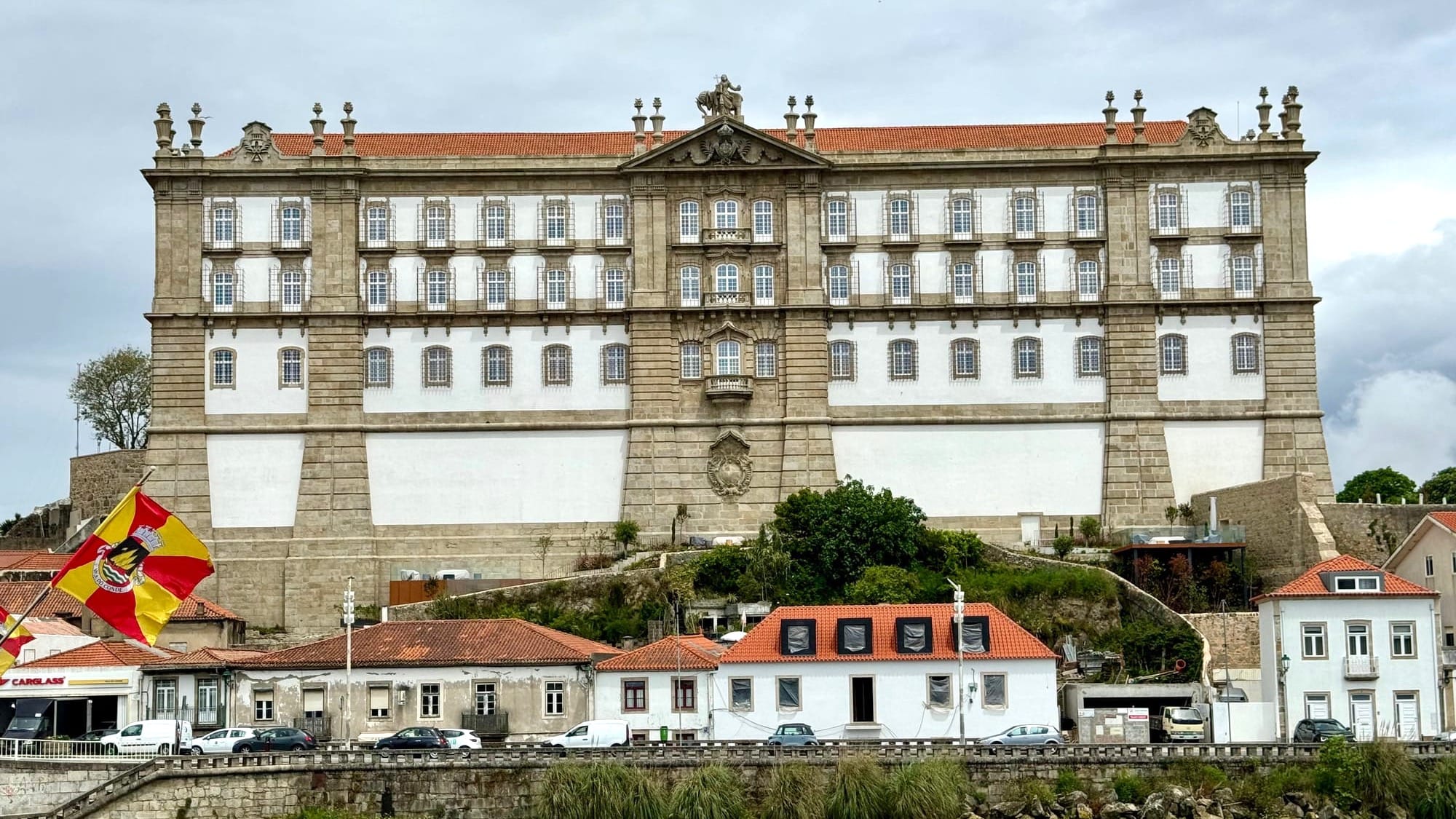
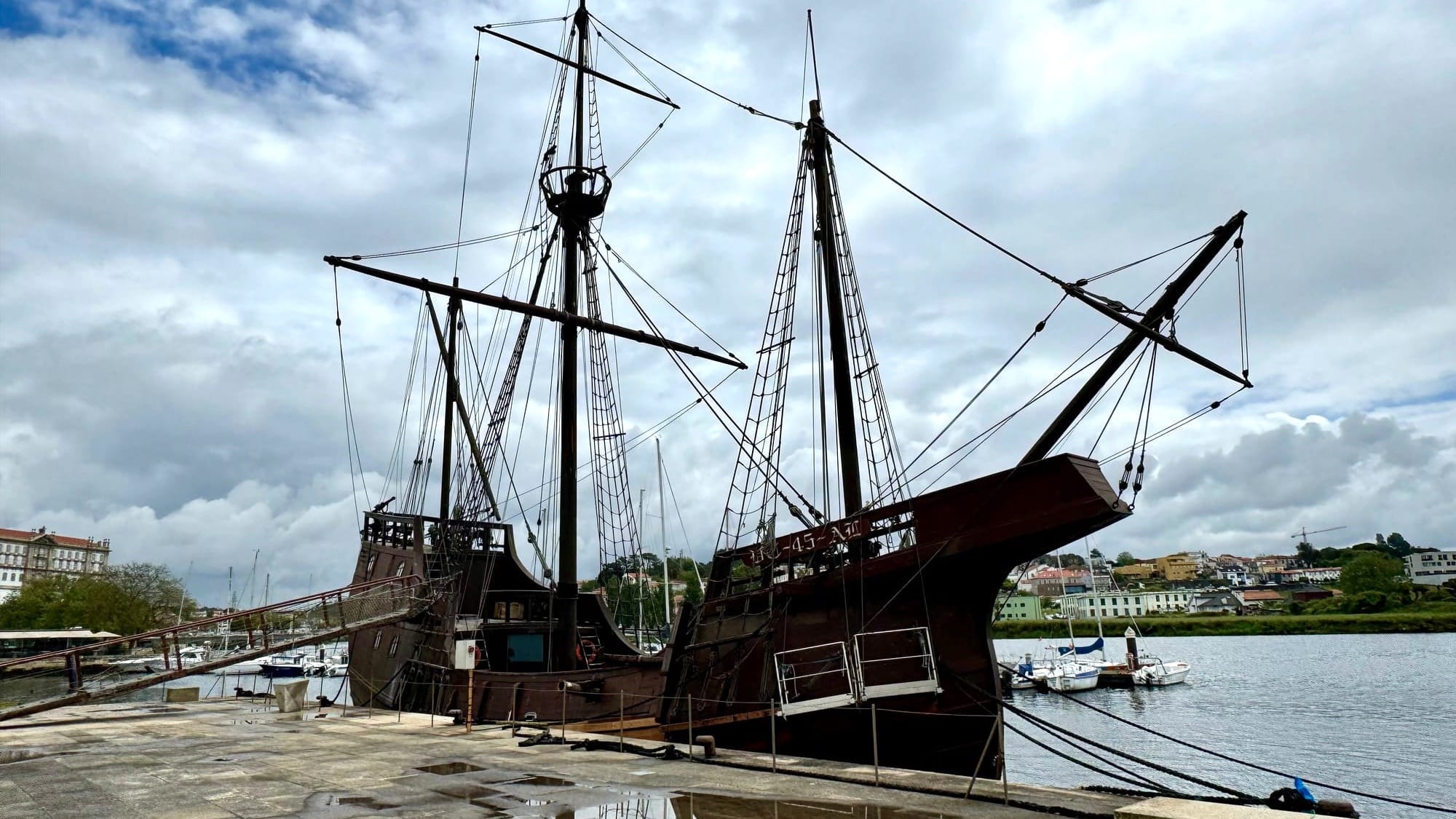
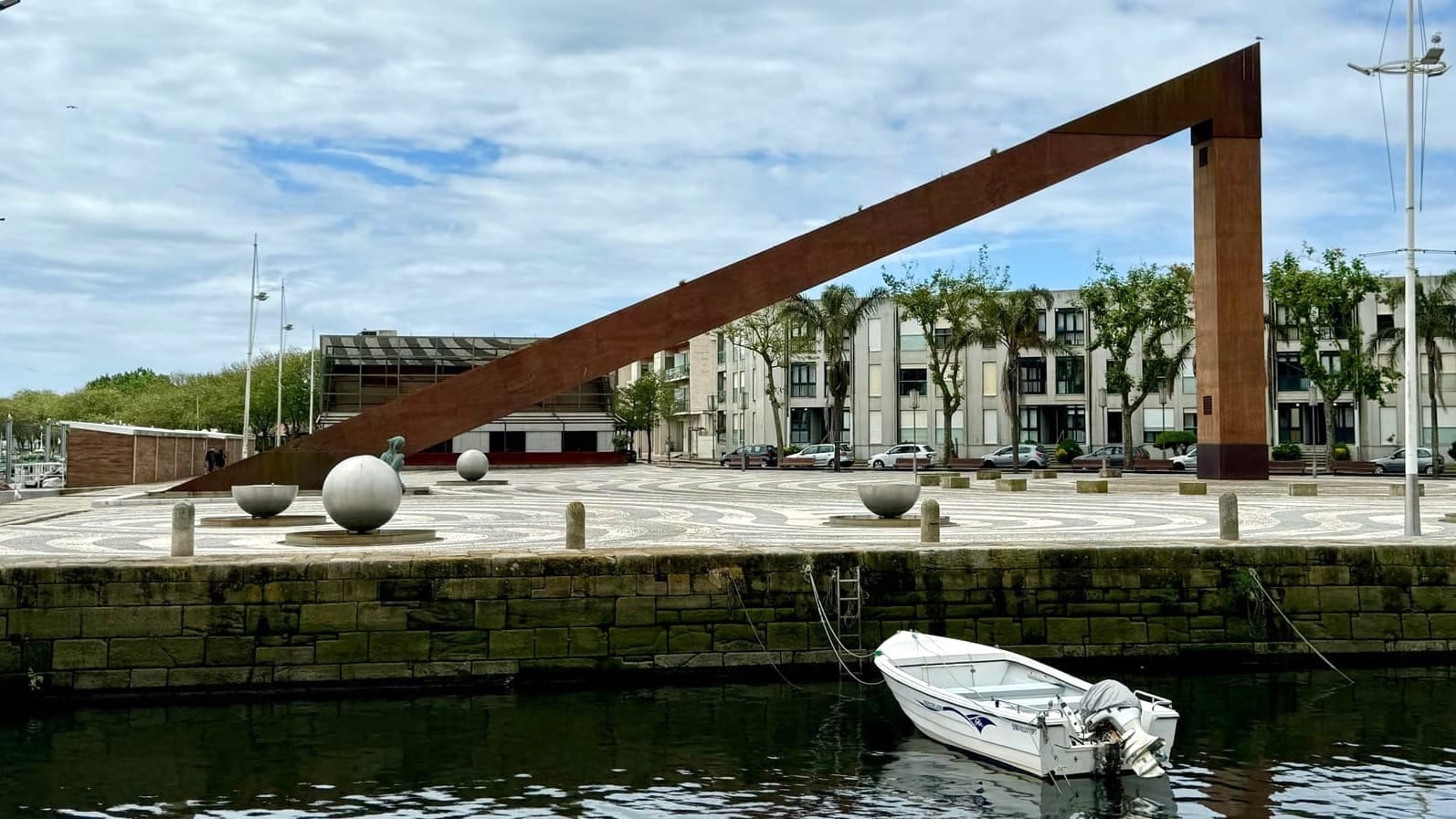
I decided to eat at Villa Pizza, which had glowing reviews but was nearly deserted when I arrived, save for a mother and daughter sharing lunch inside. Undeterred and ravenous, I took a table and ordered my usual Margherita with olives (some purists insist you shouldn't mess with the classics; I say, stick an olive on it), some rosemary focaccia with olive oil, a small beer, some water to rehydrate (important!), and a coffee to finish. It was most excellent. The food in Portugal was almost unfailingly delicious, incredibly fresh, and astonishingly cheap. The entire meal cost just 16 euros (about £13.50). Buoyed by the injection of carbohydrates, caffeine, and frugality, I set off along the coast once again.
Continuing up the coast, I skirted past the Igreja Paroquial de Nosso Senhor dos Navegantes (Parish Church of Our Lady of Seafarers), a building designed to mimic the shape of an old-fashioned fishing boat. This beautiful, curved structure rises gracefully to an elegant point, all rendered in soothing tones of ochre and cream. It's a delightful architectural tribute to the town's maritime heritage.
Povoa de Varzim: 39.7km
I made my way into the town of Povoa de Varzim, which presented an impenetrable wall of nearly identical hotels lining the main road that winds its way up much of this part of the coastline. It was not a pretty sight.
However, it did boast an incredibly wide expanse of flawless, beautiful sandy beach that stretched for perhaps four kilometres uninterrupted. Likely, this was the draw for the couples and families who must flock to the hotels in their thousands during the summer months; it certainly couldn't be the architecture.
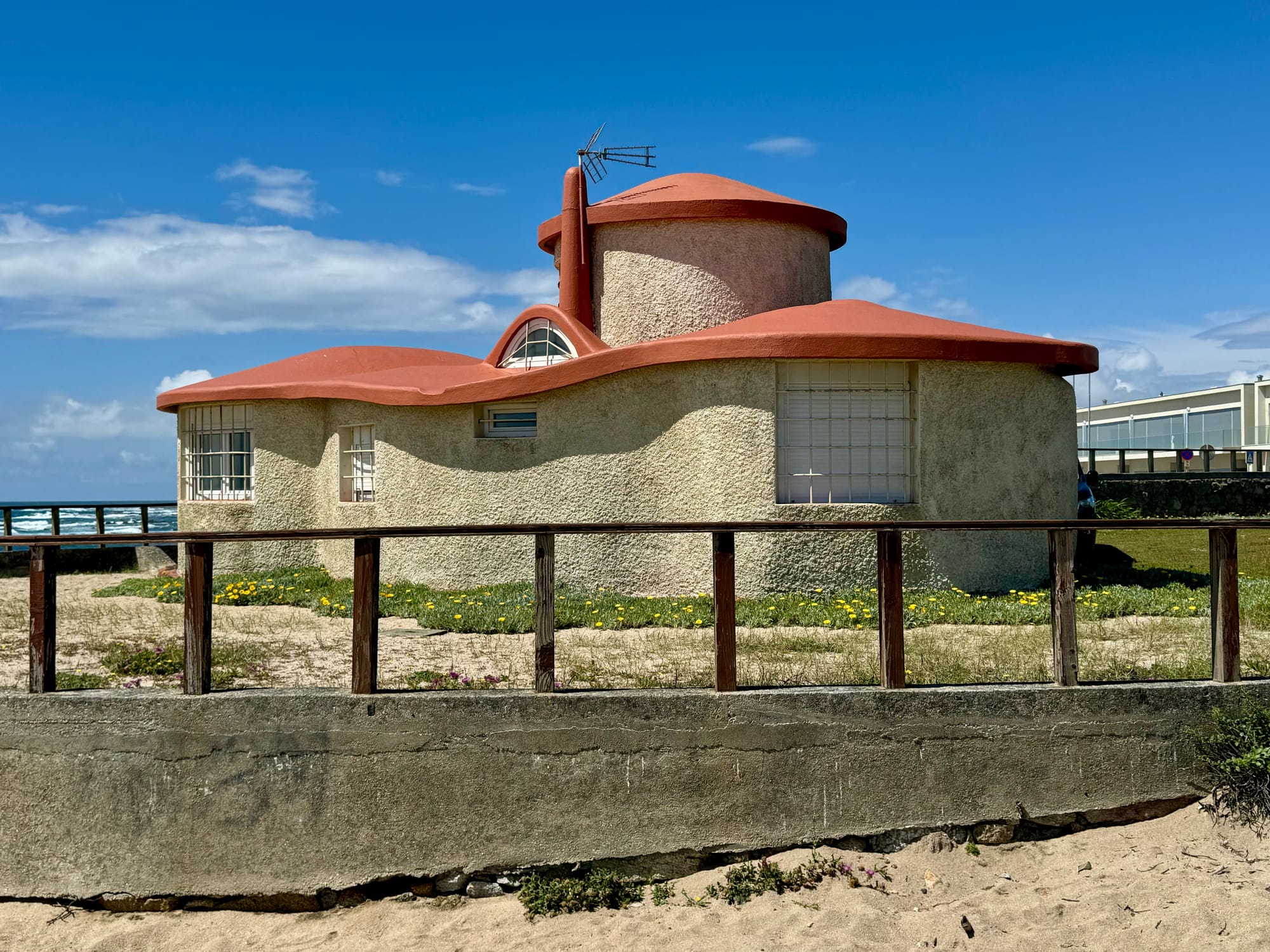
On the outskirts I made my way past the Mushroom House which sits awkwardly, but somewhat cheerily, among apartments and industrial units. I couldn't find any more information about it so I'll leave you wondering.
Apulia: 53.3km
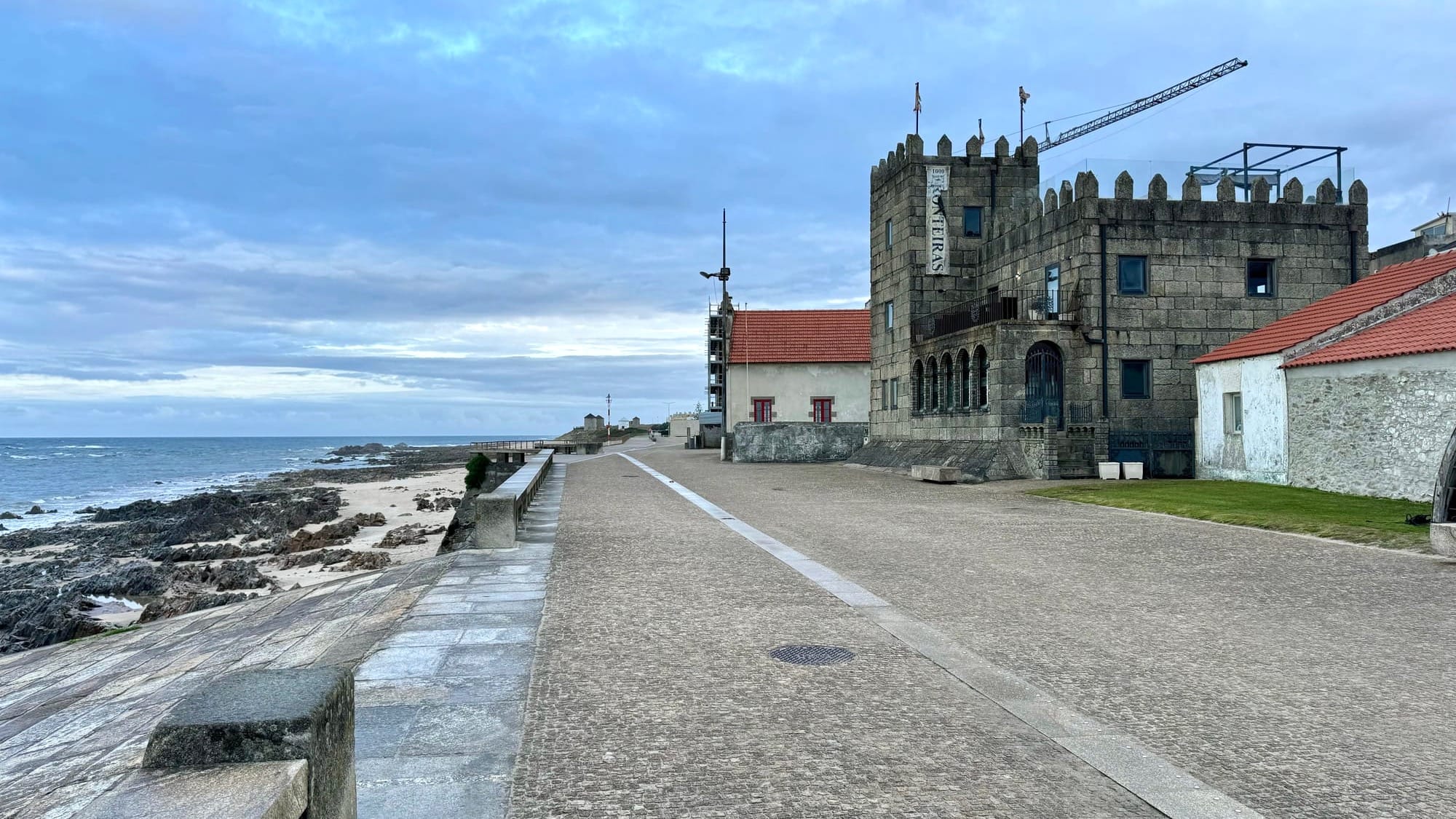
Now feeling soreness in my feet and quite certain that a couple of blisters were demanding attention, I was eager to reach my accommodation for the night. The path mercifully returned to boardwalks for a while, then veered inland to avoid a golf course, leading me past agricultural fields filled with row after row of enormous polytunnels.
The small town of Apulia was quiet when I arrived. It didn't seem to be much of a tourist destination, and with a local population of just over four thousand, it certainly wasn't "lively." I checked into my room around 5:30 pm, unpacked, changed, and ventured out to find some dinner. I grabbed a beer at a bar overlooking the beach, but with the evening turning cool and me clad only in lightweight hiking gear, it was a bit too chilly to sit outside.
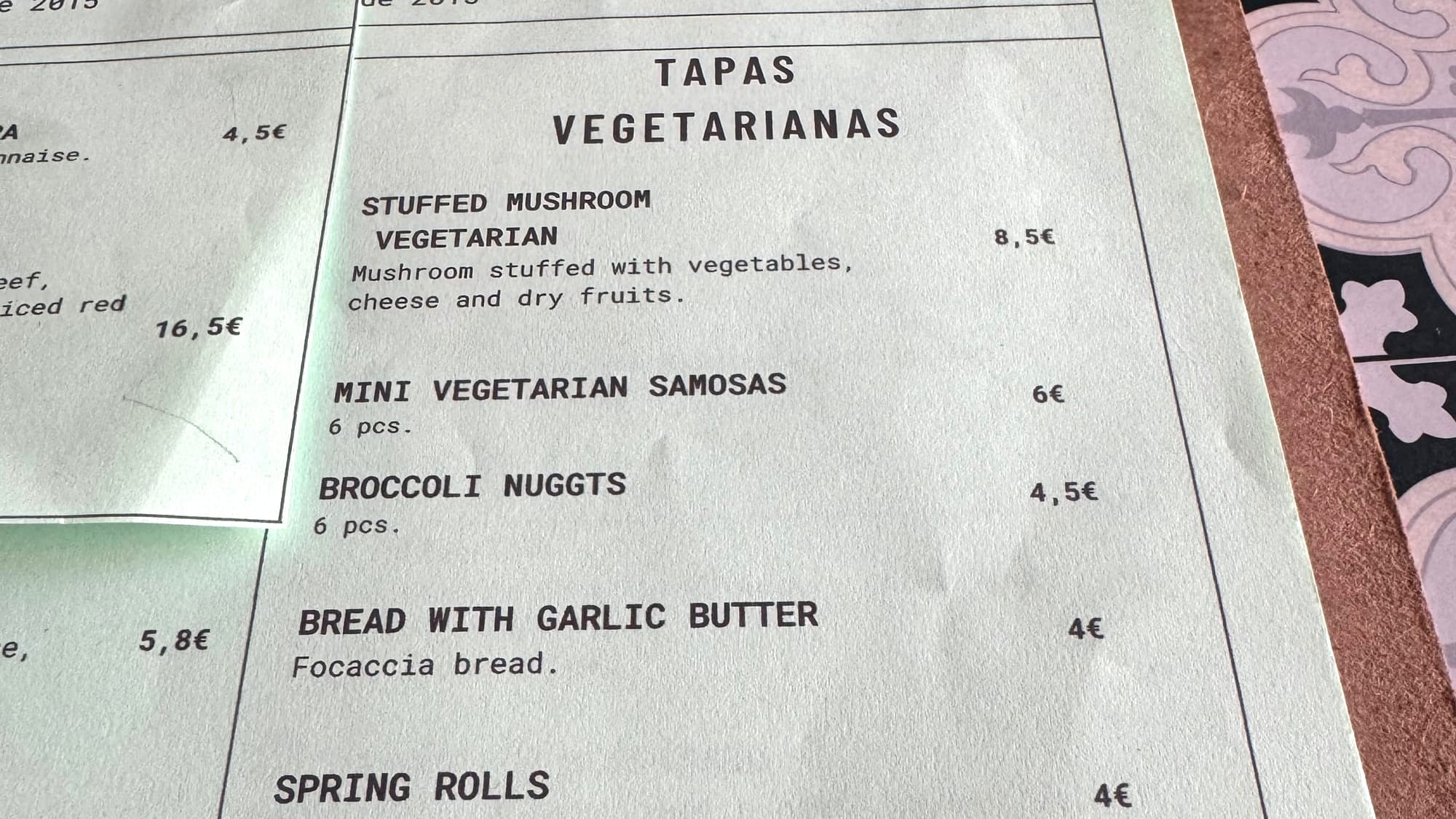
With no small amount of luck, I stumbled upon a tapas restaurant that, to my great relief, offered a modest range of vegetarian dishes. However, when the food arrived, I couldn't help but think that "The Beige Selection" would have been a more fitting description. Still, it was food, and I was hungry. I settled in with a cold glass of Vinho Verde, and despite my sepia-hued smorgasbord, I found some comfort. After settling up, I returned to my hotel for a good night's rest, ready to tackle the next day's adventures.
Summary
With fresh legs, the first forty or so kilometers sailed past with relative ease. Beyond that, it became progressively tougher, and by the time I reached Apulia, I had most definitely Had Enough. My second day was planned to be roughly the same length, so I was a tad apprehensive about how things would feel in the morning, but overall, I was feeling positive.
The weather was perfect—a cool, misty start followed by bright sunshine for most of the day, with a coastal breeze providing welcome relief against the heat. Having booked my first two nights of accommodation before setting off, I had limited opportunity to stop and explore the more interesting locations along the way. In hindsight, I wouldn't have chosen Apulia for an overnight stay if I'd known how little it had to offer.
I walked alone the whole day but often exchanged a cheery shout of "Bom Camino" or engaged in brief conversations with the few other walkers I encountered. It was a solitary yet convivial journey, marked by moments of shared camaraderie amid the long stretches of solo trekking.
- Pizzas eaten: 1 (excellent, 8/10)
- Not pizzas eaten: 1 (average, 4/10)